

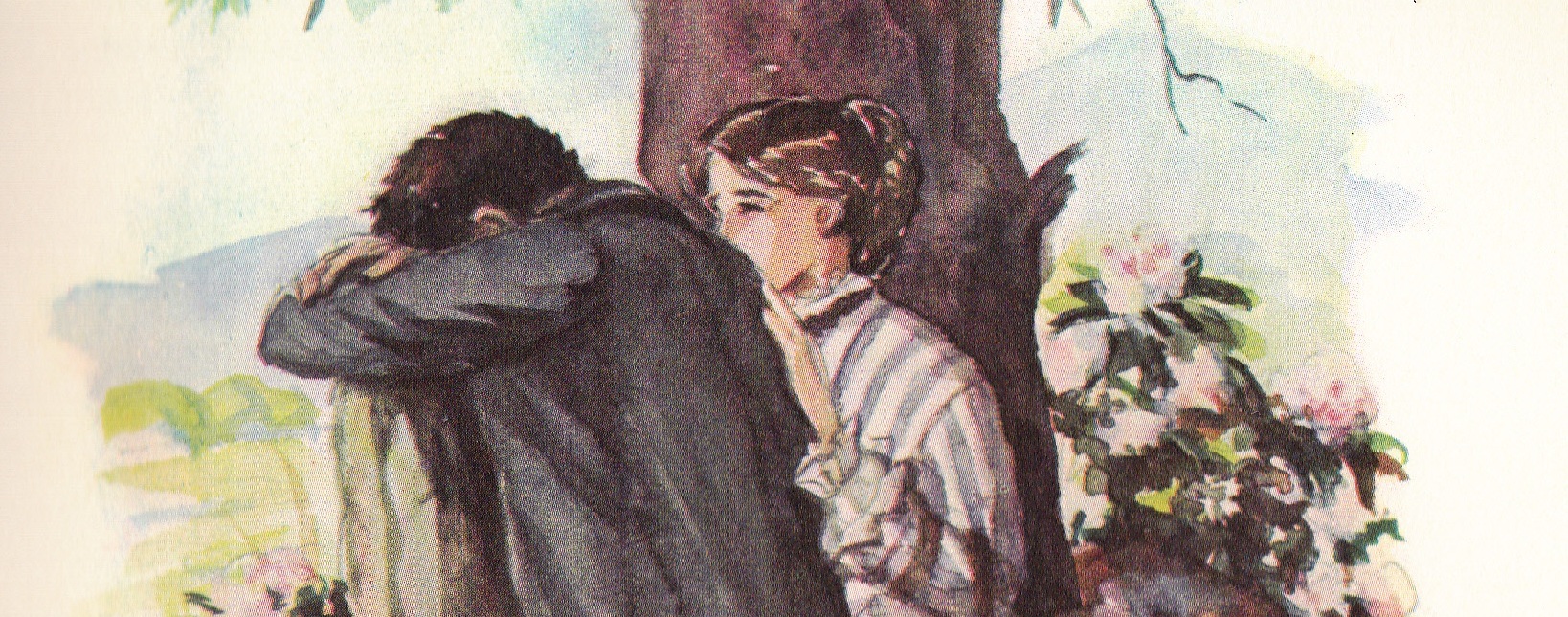
“You don’t know love when you see it. You’ve tricked something out with your imagination that you think love, and you expect the real thing to look like that.”
Anne of the Island
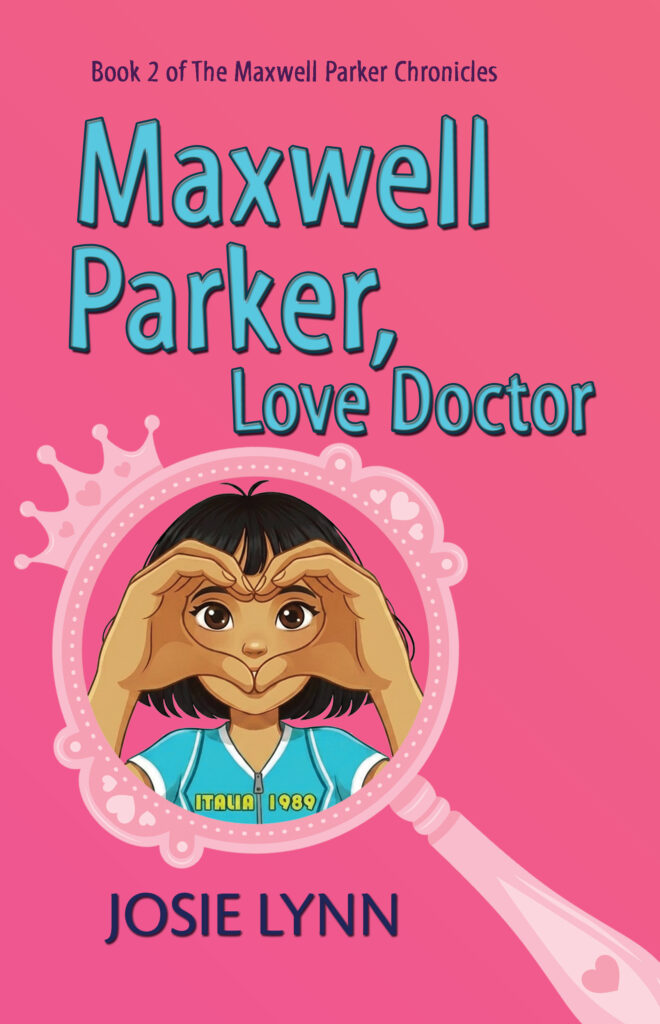
I have a book (Maxwell Parker, Love Doctor) that is coming out this month. How’s that for a plug?
It’s the second book in the Maxwell Parker Chronicles, a series for young readers starring my irrepressible heroine, Maxwell Parker, who sees herself as an amateur detective. However, in the second installment, she’s not sniffing out crime, she’s sniffing out love. It’s a natural progression.
The course of true love never did run smooth. . .
Love always seems to start off as a bit of a mystery for many of our favorite couples in literature. We seem to love the intrigue. Perhaps it gives us hope to see that so many of the great love stories didn’t start off so great after all. There were false starts, foul-ups, misunderstandings…and poorly executed proposals, yet they always (almost always) end up in a happy ever after. On the way there, we need the conflict and the tension.
Today, I thought I’d focus on how so many of my favorite period pieces involve love gone wrong, proposals gone south, and hapless gentlemen in cravats mistakenly thinking—assuming—that their offer of marriage will be accepted simply because it was offered (and we all know what happens when you assume). While many women back in the day were grateful for and eagerly accepted any offer that came along (usually the first…Charlotte Lucas comes to mind), some of our favorite ladies in literature decided to make their men grovel just a bit longer and ultimately come back with an offer that was a bit more earnest, a tad less entitled, with all of the arrogant assumptions pitched out of the window.
In honor of my upcoming love-themed book, I’ve composed a list of a few of my favorite botched proposals and awkward refusals from a few of my favorite movies:
1. North and South

Margaret Hale’s first shot at love comes in the form of Henry Lennox, a well-connected lawyer. He lazily assumes that she is fishing for a proposal of marriage, because she mentions the word wedding in his presence. He is overly confident that she, the daughter of a poor parson, will jump at the chance to be his wife. Margaret is fiercely independent and has to set him straight and send him packing.
Next she attracts the attention of the wealthy mill owner, John Thornton. He proposes to her, also confident that she will jump at the chance to improve her financial situation. She has to assure him that his ungentlemanly behavior has not impressed her. She also states that she has not yet learned how to graciously turn down proposals, and he quips back with, Oh… so I guess I’m not the first man whose heart you’ve had the privilege of breaking (or something to that effect). When it comes to biting sarcasm, John Thornton and Elizabeth Hale are on equal footing.
After Mr. Thornton, Mr. Bell, a friend of her father, admits that he’s interested in her as a wife/companion/nurse. As attractive as that particular offer may be, Margaret is able to graciously spurn his advances as well. She’s learning.
And finally, John Thornton gets it right. Margaret meets him halfway, and the movie ends the way we all knew it was destined to end the first time our two leads had their first encounter.
2. Pride and Prejudice

First, poor Elizabeth Bennet has to deal with the ridiculous Mr. Collins’ offer, which included some very flattering reasons he has decided to enter into matrimony (to set the right example and as a way to kiss up to his boss), a bribe (if you marry me, I won’t turn you and your mother and sisters out on your ears when your daddy dies and I inherit your estate), and a thinly veiled insult (I wanted to marry your prettier older sister but a little bird told me she’s already spoken for).
Then she has to face Mr. Darcy’s quite rude admission: I find you and your family disgustingly beneath me, yet I have been hypnotized by your eyes. I love you in spite of myself. Please, put me out of my misery. That Darcy sure did know how to sweet-talk a girl. He should have just carried a miniature painting of his estate in his coat pocket.
Being a self-respecting regency woman, Elizabeth had to turn this tempting offer down, and she did so in style. Darcy was chastened—to say the least—and later returns with a much more satisfying proposal, one that was worthy of the woman he was wooing.
3. Little Women
How could Teddy (Laurie) have been so blind? How did he not pick up on any of the many signals that Jo tried to send that she was not looking for a proposal? She never wanted to move him out of the friend category. Why did he think he could change her mind?

Here’s is a hint for wannabe suitors: When the girl says, “No, Teddy, please don’t,” now is not the time to stubbornly plow ahead. Now is the time to regroup and reassess the relationship.
Also, using the line “Everyone’s expecting it” generally never works because she will then counter it with the reasonable-sounding, “Then we’d be doing it for all the wrong reasons.” And there’s no way you can answer that.
You have to give Laurie an A for effort, though. His failed proposal and subsequent heartbreak is one of the most touching moments in all love stories.
On a side note, does anyone else love that Laurie grew up to be Batman? (Or am I confusing real-life with fiction again? Oh well, it happens).
4. Far From the Madding Crowd

Shepherd Gabriel Oak’s first clumsy attempt to court Bathsheba Everdene was something of a “Me, Tarzan…you, Jane,” caveman approach. Although, I have to say, I sort of melted at the sight of the baby lamb and when he said, “I love you far more than common!” I mean, come on…who says that?
Over time, he learns to refine his approach and Bathsheba learns to genuinely love him, and somehow I feel that their relationship, more than any other in literature, is one that is based on mutual affection and respect. (Never mind the fact that between Gabriel Oak’s first and final proposal, Bathsheba mischievously toys with the affections of a middle-aged bachelor gentleman farmer who lives nearby and drives him to the point of homicidal mania or that she succumbs to the advances of a gold-digging, pretty boy, love child of a noble and almost loses her fortune to him!) The salient point is that in the end, things worked out for Bathsheba and Gabriel.
5. Anne of Avonlea (Anne, the Sequel)

Like Laurie, Gilbert misread all of the signs and projected his feelings on to Anne. Sort of. The truth was, Anne did love Gilbert, but she wasn’t ready to admit it to herself just yet. His profession of love was premature, her protestation against love was as ridiculous as it was futile.
Anne goes on to attract the attention (in the movie…not the book) of a rich widower, Morgan Harris, who gives Anne the proposal of her dreams, forcing her to wake up and smell the wholesome sea air and realize that she’s meant to stay in Avonlea and live blithe-fully ever after with Gilbert.
Fortunately for them (and for us), Gilbert got what alluded Laurie: a second chance and, for him, the second time was the charm.
In the Anne books, Anne is subjected to a whole series of proposals gone wrong from all manner and form of suitor (suitable and otherwise), which leaves us amused and her traumatized and primed for Gilbert’s second, final, and ultimately successful attempt. And Anne learns something we all do well to remember:
“Perhaps, after all, romance did not come into one’s life with pomp and blare, like a gay knight riding down; perhaps it crept to one’s side like an old friend through quiet ways; perhaps it revealed itself in seeming prose, until some sudden shaft of illumination flung athwart its pages betrayed the rhythm and the music, perhaps . . . perhaps . . . love unfolded naturally out of a beautiful friendship, as a golden-hearted rose slipping from its green sheath.”
Lucy Maud Montgomery


Leave a Reply